
How to say thank you in Turkish – and how to reply
Thank you in Turkish is Teşekkür ederim (teh-shek-kewr eh-deh-reem). In everyday life you will hear Teşekkürler and Sağ ol (sah-ol) just as often. Which one fits depends on who you are talking to – a waiter, your neighbour, your mother-in-law or someone at the tax office. Below are 9 ways to say thanks, with pronunciation and audio, a quick cheat sheet, and the right replies when someone thanks you.
The main ways to say thank you in Turkish
Pronunciation tips: ş sounds like "sh", ç like "ch" and ü like the "ew" in "few" said with rounded lips. The ğ in sağ is silent – it just lengthens the a, which is why it sounds like "sah-ol". Literally, teşekkür ederim means "I make thanks" and sağ ol means "be healthy".
Thanks for food and work: eline sağlık
If you live in Turkey or have a Turkish partner, this is the phrase to learn first. After a home-cooked meal, eline sağlık is almost expected; a plain "thank you" is fine, but this shows you know how things work. It also fits when the plumber fixes your boiler or a neighbour brings round a plate of börek. The dotless ı in sağlık is a short, relaxed "uh" sound.
How to reply when someone thanks you
Watch the c: in Turkish it sounds like the "j" in "jam", so it is "ree-jah", not "ree-kah". And remember that rica ederim only answers a thank you. To say "please" when asking for something, use lütfen (lewt-fen).
Cheat sheet: which thank you, when?
| Situation | What to say |
|---|---|
| Cashier, waiter, taxi driver | Teşekkürler or Sağ olun |
| Friend, neighbour your own age | Sağ ol |
| Doctor, official, older person | Teşekkür ederim |
| After dinner with Turkish family | Eline sağlık / Ellerinize sağlık |
| Someone went out of their way for you | Çok teşekkür ederim |
When in doubt, teşekkür ederim is never wrong.
Common mistakes English speakers make
- Saying just "teşekkür". On its own it means "thanks" as a noun. Say teşekkürler or teşekkür ederim.
- Reading ş as s. "Tesekkur" sounds foreign to Turkish ears; aim for "teh-shek-kewr".
- **Answering hoş geldiniz with thank you.** When a shopkeeper or host welcomes you with hoş geldiniz, the expected reply is hoş bulduk (hosh bool-dook).
- Learning the word but never saying it. Most of us know teşekkürler long before it comes out naturally at the till.
Make it automatic
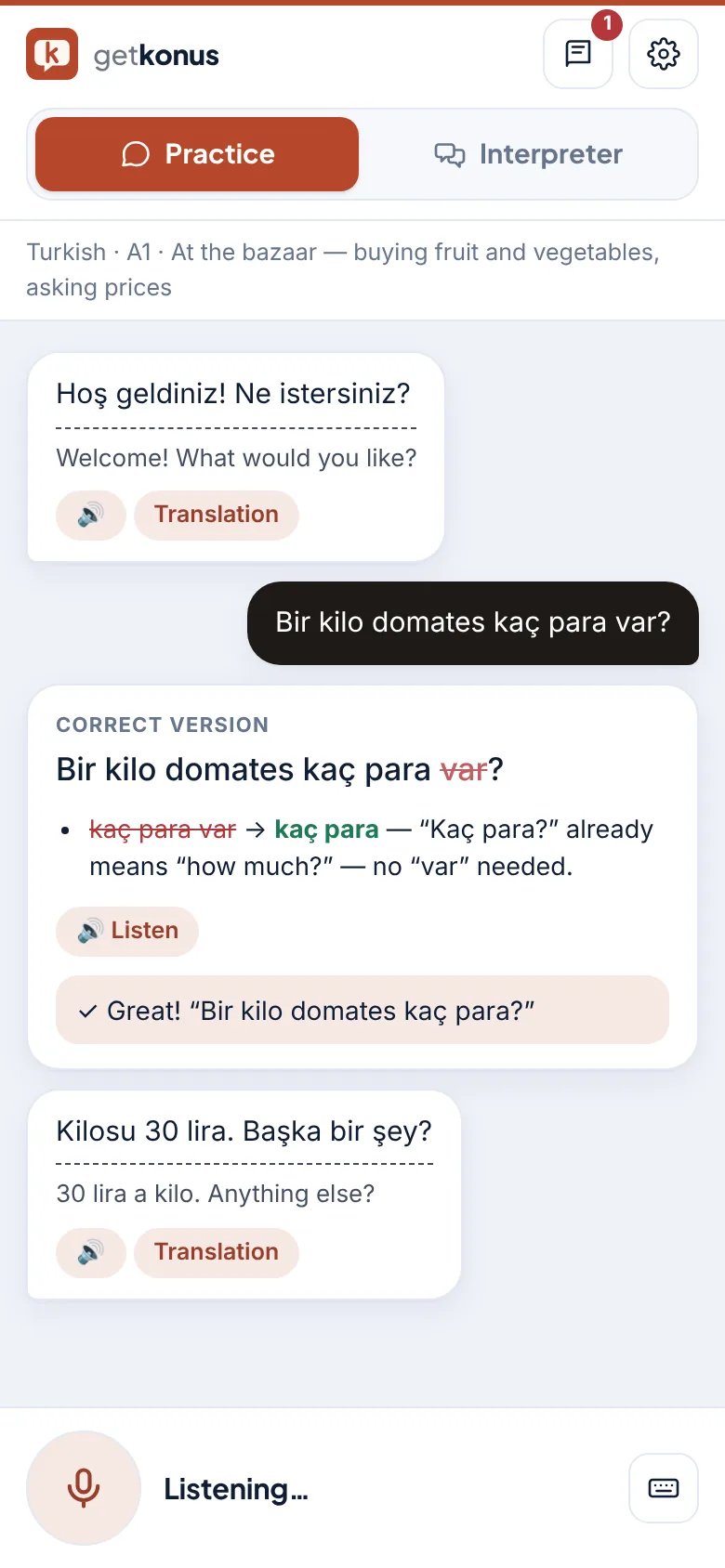
Thank you sticks best when you practise it inside small scenes rather than as a single word: ordering at a café, paying a dolmuş driver, finishing dinner at your in-laws'. In Konuş you can practise exactly that with an AI conversation partner. You speak Turkish, every sentence is corrected and explained in English, and the conversation carries on. It is free while in testing and needs no sign-up. For more short guides, see Turkish for everyday life.
Frequently asked questions
How do you pronounce teşekkür ederim?
Teh-shek-kewr eh-deh-reem. The ş is "sh" and the ü is a rounded "ew". Turkish stress is light, so say the syllables fairly evenly.
How do you say thank you very much in Turkish?
Çok teşekkür ederim (chok teh-shek-kewr eh-deh-reem). Çok means "very" or "a lot".
What is the difference between sağ ol and teşekkür ederim?
Sağ ol is casual and used with friends and in everyday shops; teşekkür ederim is neutral and polite. To be polite with sağ ol, say sağ olun.
What do you say back to eline sağlık?
Usually afiyet olsun (enjoy your meal) or simply sağ ol.
How do you say you're welcome in Turkish?
Rica ederim (ree-jah eh-deh-reem) or, more casually, bir şey değil (beer shey deh-eel).